
Here are the 10 biggest examples. Buckle up.
10. The Phone Call That Gave Manchester United Eric Cantona
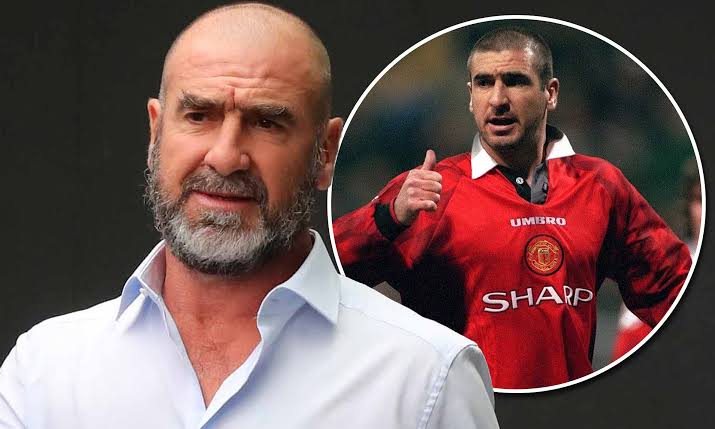
In late 1992, Leeds United manager Howard Wilkinson picked up the phone to call Alex Ferguson. He wanted to ask about signing Manchester United defender Gary Pallister.
It was the kind of routine inquiry that happens between managers every week, the sort of chat that usually leads nowhere.
The conversation drifted, as these chats often do. Ferguson casually asked about a moody but brilliant French forward Leeds had at the club named Eric Cantona.
Wilkinson had grown tired of his attitude and was open to letting him go. Within days, Cantona was a Manchester United player for just £1.2 million, one of the greatest bargains in football history.
He transformed the dressing room overnight. He mentored a young Class of 92 that included Beckham, Scholes, and the Nevilles, and dragged United to their first league title in 26 years.
He also became one of the most iconic players to ever wear the number 7 jersey, a shirt later passed to Cristiano Ronaldo. The Guardian called Cantona the player who changed Manchester United forever.
That single phone call sparked a Premier League dynasty that reshaped English football for two decades. Without it, the United we know today might never have existed.
9. Jock Stein’s Heart Attack Stopped Ferguson Going to Arsenal
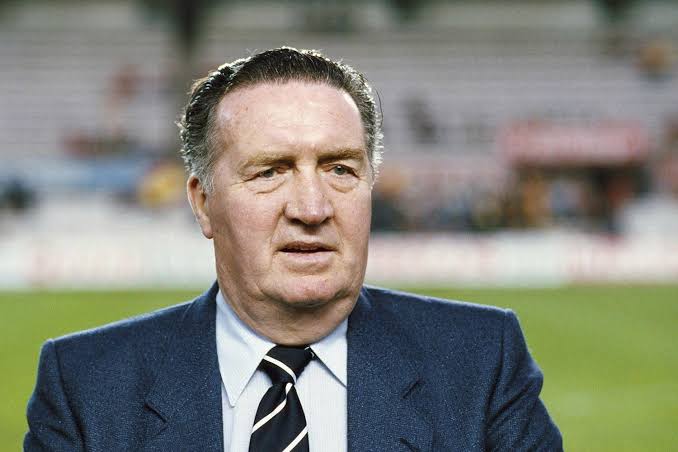
In September 1985, Scotland manager Jock Stein, who is one of the football managers with the most trophies, collapsed on the touchline during a World Cup qualifier against Wales and died shortly after. It was a devastating moment for Scottish football and, as it turned out, a pivotal one for English football too.
His assistant Alex Ferguson, then manager of Aberdeen, stepped up to lead Scotland to the 1986 World Cup. That commitment kept him unavailable for almost a year, right at the moment Arsenal were quietly searching for a new manager. They had identified Ferguson as their top target.
Arsenal eventually lost patience and moved on. They appointed George Graham instead. A year later, Manchester United came calling and Ferguson took the job that defined his career, winning 38 trophies at Old Trafford and becoming the most successful manager in football history.
Had Stein lived, Ferguson likely ends up at Arsenal. There is no United dynasty, no Class of 92, and almost certainly no Arsène Wenger in north London either. One tragic moment quietly rewrote the history of two of England’s biggest clubs.
8. A Dictator’s Leg Won Denmark the Euros
In 1980, Yugoslav leader Josip Broz Tito was hospitalised with a serious vascular infection in his leg. Doctors strongly advised amputation to save his life.
Tito refused, reportedly saying he would rather die than lose his leg. He died from complications shortly after, and his death effectively signed Yugoslavia’s death warrant as a unified nation.
Without Tito’s iron grip holding the country together, Yugoslavia steadily fell apart. By the early 1990s, the region was engulfed in brutal war, and UEFA banned the Yugoslav national football team from Euro 1992 as a result of the ongoing conflict.
Denmark were called up as last-minute replacements with just days to go before the tournament began. Some players were literally on holiday and had to be recalled early.
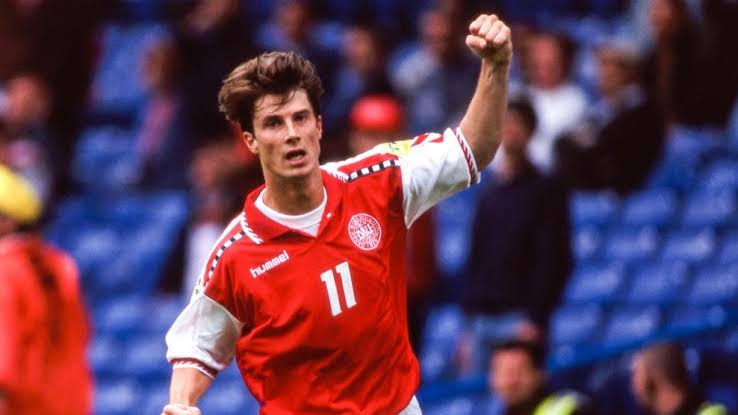
Their star man Michael Laudrup thought so little of their chances that he refused to cut his trip short at all. Nobody gave Denmark any realistic hope.
They went on to beat the Netherlands and Germany and win the entire European Championship in one of the greatest sporting upsets in history, as The Guardian documented. It all traces back to a dictator who refused an amputation.
7. An Icelandic Volcano Sent Lewandowski to Dortmund
In April 2010, the Eyjafjallajökull volcano in Iceland erupted and grounded flights across most of Europe for over a week. It caused chaos for millions of travelers, and as it turned out, it quietly changed the course of world football.
A young Polish striker named Robert Lewandowski had agreed transfer talks with Blackburn Rovers. His flight to England never happened.
Blackburn moved on without him and signed a different forward. They were relegated from the Premier League the following season.
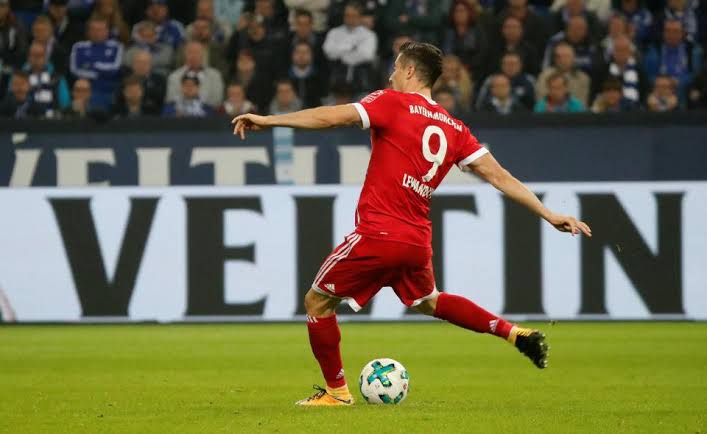
Borussia Dortmund stepped in and signed Lewandowski for a bargain fee. He went on to win two Bundesliga titles at Dortmund, reach a Champions League final, then moved to Bayern Munich where he became one of the most prolific number 9s in the history of the game.
The Daily Mail reported on how Lewandowski himself confirmed the story, saying the cancelled flight changed his life completely.
Had that flight taken off, Lewandowski might have spent his prime years at a mid-table Premier League club rather than becoming one of the most watched strikers on the planet. All because of a volcano nobody can pronounce.
6. The ITV Boss Who Built the Premier League and Lost It
In October 1990, ITV executive Greg Dyke organised a dinner with the chairmen of England’s five biggest clubs at the time: Arsenal, Everton, Liverpool, Manchester United, and Tottenham.
He pitched a bold idea: break away from the Football League, form a new elite division, and negotiate television deals directly. It was the kind of meeting that changes sport forever.
The clubs loved it. Two years later, the Premier League launched and the old First Division was history. It quickly became the most lucrative football league in the world, attracting global superstars and billions in broadcast revenue.
Then came the catch. When the TV rights went up for sale, Sky Sports outbid ITV by £42 million and walked away with everything. Dyke had organised the founding meeting, driven the breakaway, and handed English football its commercial revolution. His own network never showed a single live Premier League game.
To make it worse, ITV later launched a highlights show called The Premiership to rival Match of the Day. The public hated it. It lasted three years and was quietly cancelled. ITV created the richest league in football and got absolutely nothing in return.
5. A Dodgy Tax Scheme Created Tiki-Taka and Messi
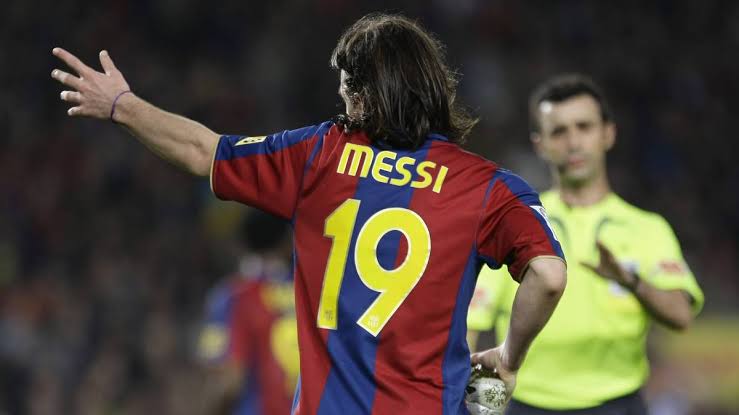
In 1987, Barcelona’s accountants came up with a clever way to reduce the club’s tax bill. Instead of paying players their full wages directly, they would route a portion through image rights contracts, which were taxed at a much lower rate.
The players were happy, the club saved money, and everyone thought it was smart financial planning.
It was not. Spanish tax authorities caught on and issued every Barcelona player with a massive personal tax bill.
The squad were furious and revolted against president Josep Núñez in what became known as the Hesperia Mutiny, a press conference at the Hesperia Hotel where the players publicly attacked the club’s leadership.
They expected fan support. Instead, supporters turned on them entirely and backed the president.
Núñez used the moment to clean house. He sold almost the entire squad and started from scratch. To win back the fans, he made a bold appointment: Johan Cruyff as head coach.
Cruyff built the legendary Dream Team, won four consecutive La Liga titles, and introduced a passing philosophy that would later become known as tiki-taka.
He also restructured the La Masia academy and gave it a clear identity
Decades later, that philosophy produced Xavi, Iniesta, Busquets, and the Guardiola era. It also created the environment that turned a small Argentine teenager with a growth hormone condition into the greatest number 10 and possibly the greatest player the sport has ever seen. You can also see just how many individual awards Messi collected as a result of that foundation.
4. Atlético Closed Their Academy and Gifted Real Madrid a Legend
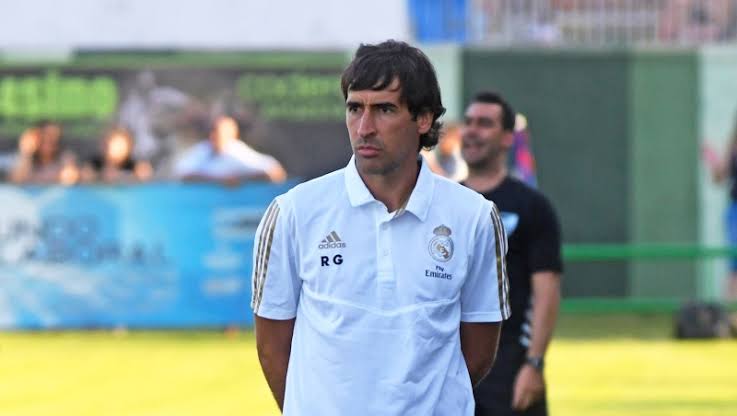
In 1992, Atlético Madrid president Jesús Gil decided to shut down the club’s entire youth setup as a cost-cutting measure.
It was a short-term financial decision that barely made the news at the time. Nobody outside the club paid much attention.
Among the kids released that day was a quiet 15-year-old striker named Raúl González.
With no club and no academy to go to, he simply walked across the city of Madrid and knocked on the door of Real Madrid’s youth academy, La Fábrica. They let him in.
Raúl rose through the ranks rapidly. He became Real Madrid’s all-time leading scorer at the time, won three Champions League titles, and lifted six La Liga trophies.
He played over 700 games for the club and remains one of the greatest number 7s in the history of football. The Guardian profiled him as one of the most complete forwards of his generation.
Atlético Madrid, meanwhile, were relegated to the second division just a few seasons later. They had released a generational talent to their city rivals simply to save money on youth team running costs. It is one of the most costly administrative decisions in football history.
3. Neal Maupay’s Tackle Won Messi the World Cup

This one is recent, well documented, and still almost impossible to believe when you lay out the full chain of events.
In June 2020, during a Premier League restart game played in empty stadiums, Brighton striker Neal Maupay clattered into Arsenal goalkeeper Bernd Leno near the end of the match.
Leno landed badly, seriously injured his knee, and was ruled out for the rest of the season.
Arsenal turned to their third-choice goalkeeper, Emiliano Martínez, an Argentine who had spent the previous season on loan in the Championship.
He had been at Arsenal for nine years without ever establishing himself as first choice. With Leno out, Martínez stepped up and played brilliantly, helping Arsenal win the FA Cup and the Community Shield, saving a crucial penalty in the cup final shootout against Liverpool.
When it became clear Leno would reclaim the starting spot once fit, Aston Villa signed Martínez for £20 million. He finally had a club where he would play every week.
His performances were outstanding, and Argentina made him their first-choice goalkeeper ahead of the 2022 World Cup. He was one of the best number 1s at the entire tournament.
In the final against France, with the score level in extra time, Martínez produced a miraculous save to deny Randal Kolo Muani a certain winner in the 123rd minute.
Argentina held on. In the shootout, he saved two penalties and used every psychological trick available to unsettle the French takers. Argentina won 4-2. Lionel Messi lifted the World Cup.
Nick Miller’s deep-dive for The Athletic traced this exact chain of events in brilliant detail and it is well worth reading in full. None of it happens without a Brighton striker’s challenge in an empty stadium four years earlier.
2. Five Extra Minutes Created Modern Manchester City
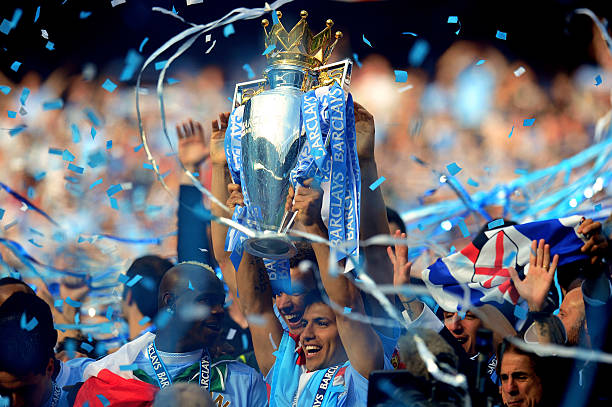
In May 1999, Manchester City played Gillingham in the Second Division playoff final at Wembley. Let that sink in.
One of the clubs that now owns more trophies than almost anyone in English football was playing in the third tier of the pyramid, in serious financial trouble, and losing with 90 minutes on the clock.
The score was 2-0 to Gillingham when referee Mark Halsey signalled five minutes of stoppage time. It felt generous.
City fans who had already started heading for the exits stopped walking. In the 90th minute, City pulled one back. Then in the final moments of added time, they equalised. The game went to extra time and then penalties, which City won 3-1.
They were promoted, climbed back through the leagues, and returned to the Premier League. Then in 2008, Sheikh Mansour of the United Arab Emirates bought the club for around £200 million and began one of the most dramatic transformations in football history.
State and royal ownership in English football effectively started here. The Guardian called it the moment that changed the financial landscape of English football forever.
Today Manchester City are serial Premier League champions and one of the most powerful clubs in world football.
If Halsey blows his whistle on time, the club might have gone bankrupt and that UAE investment goes to a completely different club. An entire empire was built on five minutes of stoppage time.
1. A Thailand Scandal Won Leicester the Premier League
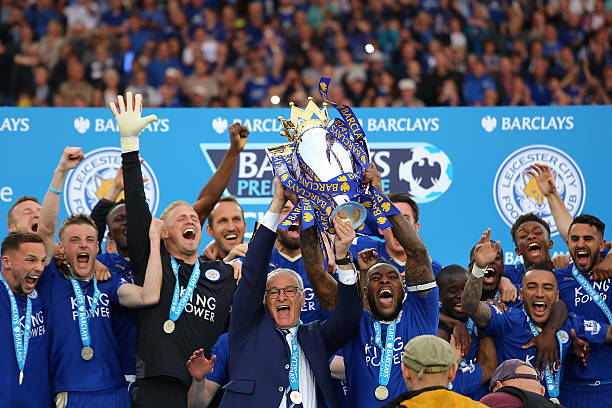
This is the wildest story on the list, and it still barely feels real even years later. In the summer of 2015, three Leicester City youth players, including the son of manager Nigel Pearson, travelled on a club tour to Thailand.
During the trip, they filmed themselves engaged in deeply offensive and racist conduct. The video found its way to a national newspaper and went public.
All three players were sacked. The Thai owners of the club were furious and humiliated.
The relationship between Pearson and the board collapsed beyond repair, and within weeks the manager was also let go, despite having just saved the club from what looked like certain relegation.
The Daily Mail covered Pearson’s dismissal in full at the time, noting how sudden and shocking it was given what he had just achieved.
Leicester needed a replacement quickly. They turned to Claudio Ranieri, a respected but unfashionable Italian who had most recently been sacked by Greece after losing a qualifier to the Faroe Islands.
Bookmakers set odds of 5,000 to 1 on Leicester winning the title. Players like Jamie Vardy and Riyad Mahrez, who carried the number 26 shirt, were considered solid Premier League players but nowhere near title-winning material.
They won it. Against every giant in the division, Leicester City won the Premier League and triggered one of the greatest celebrations in football history.
The Guardian described it as the most remarkable title win in football history. Ranieri was named the world’s best coach. It remains the most improbable league triumph anywhere on the planet, and it only happened because of one of the sport’s most shameful off-pitch scandals.
Honorable Mentions
A few wild ones that just missed the top 10:
- Paul Biya expelled from school in 1949. He later became president of Cameroon and personally ordered 38-year-old Roger Milla out of retirement for the 1990 World Cup. Milla’s corner flag wiggle after scoring effectively invented modern goal celebrations as we know them. Without a school expulsion in colonial Cameroon, the choreographed celebrations you see every weekend might never have happened.
- Denis Cheryshev’s yellow card in a Copa del Rey game got Real Madrid disqualified from the competition, contributed to Rafa Benítez being sacked, and opened the door for Zinedine Zidane. Three consecutive Champions League titles followed. Goal.com covered the Cheryshev incident and its immediate fallout in detail. Not bad for a card that felt completely meaningless at the time.
- Troy Deeney scoring seven goals in a Sunday league game while reportedly drunk. A Walsall scout who only attended because his own son was playing signed him on the spot. Deeney later scored the stoppage-time goal that crushed Leicester’s promotion push by a full season. Leicester came up the year after, signed N’Golo Kanté, and won the title. One hungover Sunday league performance changed the trajectory of an entire Premier League season.
- Benitez trying to sell Xabi Alonso to fund a move for Gareth Barry at Liverpool in 2008. The fallout damaged his relationship with Alonso permanently. Madrid signed him the following summer, triggering a chain of departures including Torres and Mascherano that plunged Liverpool into one of the darkest periods in the club’s modern history.