

Football stadiums are the essential venues where the beautiful game comes alive.
The size and capacity of a stadium can transform a football match into something truly extraordinary.
Some nations have invested more heavily in football infrastructure than any other, building hundreds of grounds to serve their passionate supporters.
Today we count down the 10 countries with the most football stadiums in the world, based on venues with a capacity of at least 10,000, using data from the Wikipedia list of association football stadiums by country.
10. Nigeria – 36 Stadiums
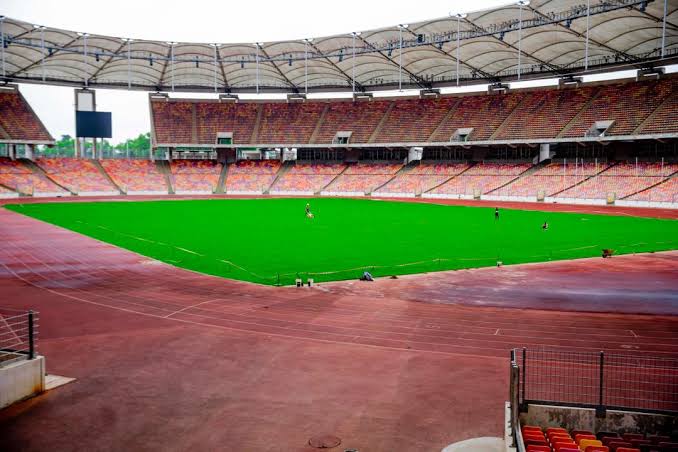
Nigeria is the most football-mad nation in Africa, with 36 major venues meeting the 10,000-capacity threshold.
The largest is the Moshood Abiola National Stadium in Abuja, which holds 60,491 fans.
The Jos International Stadium is the second biggest, with a capacity of 60,000.
The Super Eagles have won the Africa Cup of Nations three times, and their domestic league spans the entire country.
Nigeria are one of the most successful African nations in football and grassroots passion from Lagos to Kano explains the demand for so many stadiums.
You can read more about the biggest football stadiums in Nigeria and the best football stadiums in Nigeria in our dedicated guides.
9. South Korea – 42 Stadiums
South Korea has 42 stadiums with a capacity of at least 10,000, many of which were built for the 2002 FIFA World Cup co-hosted with Japan.
The Seoul Olympic Stadium is the largest, holding 69,950 fans.
The Seoul World Cup Stadium holds 66,806 and is the home of FC Seoul, purpose-built for the 2002 tournament.
South Korea reached the semi-finals of that World Cup, beating Spain, Italy, and the USA in one of the greatest tournament runs in history.
South Korea are one of the best football nations in Asia and their modern, purpose-built stadiums are among the finest in the world.
You can read more about the top football clubs in South Korea and the best football players South Korea has ever produced.
8. Thailand – 42 Stadiums
Thailand also has 42 stadiums, which shows just how far football has grown across Southeast Asia in recent decades.
The Rajamangala Stadium in Bangkok is the largest, holding 48,000 fans, and it opened in 1998.
It remains one of the most atmospheric venues for international football in the entire Asian continent.
Buriram United’s Chang Arena (32,600) is widely regarded as one of the best club stadiums in all of Asia.
The Thai League 1 has grown significantly in recent years, attracting investment from both local businesses and international clubs.
7. Germany – 61 Stadiums

Germany has 61 major stadiums with a capacity of at least 10,000, which is an extraordinary number for a country of 84 million people.
The Westfalenstadion in Dortmund holds 81,365 fans and is widely considered the loudest stadium in Europe.
It is home to the famous Yellow Wall, the largest single-tier standing section in European football.
The Allianz Arena in Munich (75,024) is one of the most visually iconic stadiums in the world.
The Olympiastadion Berlin (74,475) hosted both the 1974 and 2006 World Cup Finals, two different generations of the game’s greatest tournament.
Germany are one of the most decorated countries in football history with four World Cup titles.
6. India – 65 Stadiums
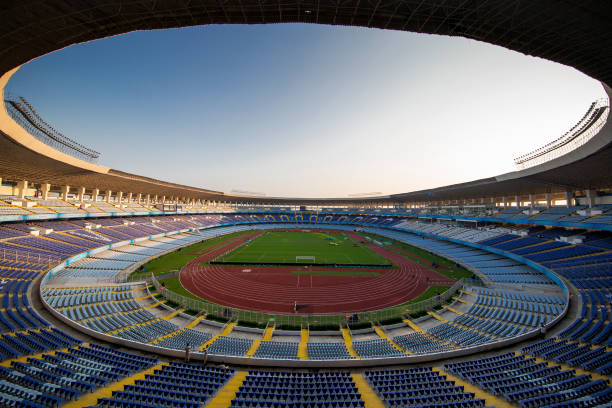
India is home to 65 major football stadiums with a capacity of at least 10,000.
The Vivekananda Yuba Bharati Krirangan in Kolkata, known as Salt Lake Stadium, is the largest with a capacity of 85,000.
It is one of the largest football stadiums in the world and one of the most atmospheric in all of Asian football.
The Jawaharlal Nehru Stadium in Delhi holds 60,254 fans and regularly hosts international matches.
India are one of the most rapidly developing football nations in Asia, with the Indian Super League driving huge investment at club level.
You can read more about the best Indian footballers of all time and the top football clubs in India.
5. Indonesia – 78 Stadiums
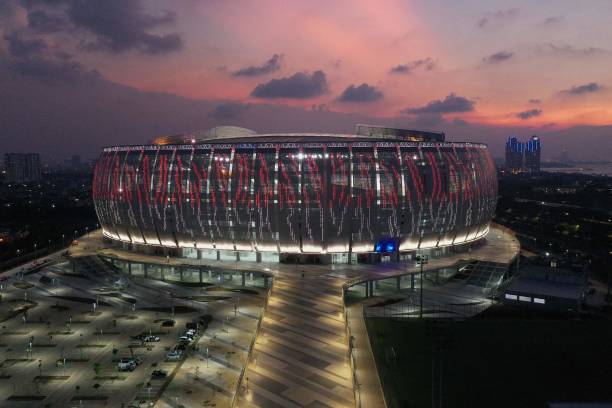
Indonesia has 78 major stadiums spread across its many islands, making it the biggest surprise on this entire list.
Football is the most popular sport in Indonesia, with the game stretching from Sumatra to Papua across thousands of kilometres.
The Jakarta International Stadium is the largest, holding 82,000 fans, and it opened in 2022 as one of the newest modern football venues in Asia.
The Gelora Bung Karno Stadium (77,193) hosted the 1962 Asian Games and remains a spiritual home of Indonesian football.
The national team has made significant strides in recent years, and you can read more about the top football clubs in Indonesia.
4. United Kingdom – 86 Stadiums
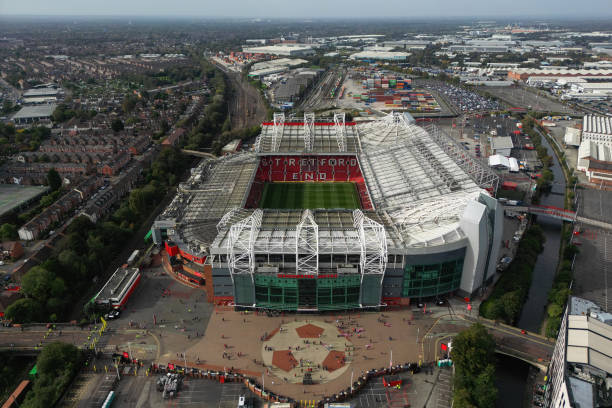
The United Kingdom is the birthplace of football and has 86 major stadiums with a capacity of at least 10,000.
England alone accounts for 64 of those stadiums, a reflection of the country’s deep-rooted football pyramid.
Wembley Stadium holds 90,000 fans and is the home of English football, hosting the World Cup Final in 1966 along with countless Champions League and FA Cup Finals.
It is one of the biggest football stadiums in England and one of the most iconic sporting venues on earth.
Old Trafford in Manchester (74,310) is the most famous club ground in England, while Anfield in Liverpool (61,015) is the most atmospheric.
The English football league is the oldest in the world, and its longevity explains why the UK has accumulated so many stadiums over more than a century of professional football.
3. USA – 88 Stadiums
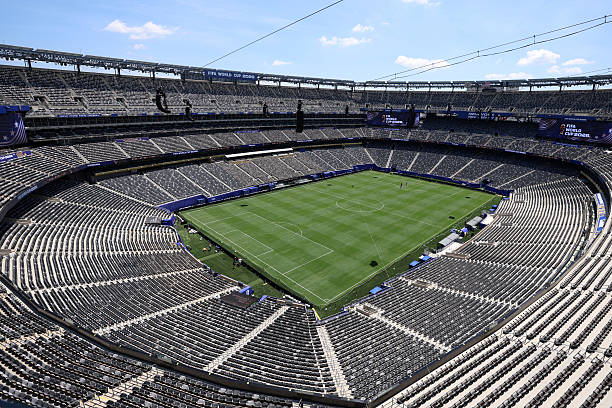
The United States has 88 major stadiums with a capacity of at least 10,000, placing it third on this list and reflecting the explosive growth of soccer in North America.
Many of these venues are multi-purpose stadiums shared with American football and baseball, but a growing number are now purpose-built soccer stadiums.
The largest is Michigan Stadium in Ann Arbor, which holds an extraordinary 107,601 fans, making it one of the biggest stadiums of any kind in the world.
MetLife Stadium in New Jersey holds 82,500 fans and will host the 2026 FIFA World Cup Final, one of the most anticipated sporting events in history.
The MLS has expanded dramatically in recent years, with clubs like Inter Miami, St. Louis City SC, and San Diego FC all opening brand new purpose-built soccer stadiums.
According to FIFA, the 2026 World Cup will be hosted across 16 cities in the USA, Canada, and Mexico, making it the biggest World Cup in history.
You can read more about the best MLS stadiums and the best soccer academies in the USA.
2. Brazil – 108 Stadiums
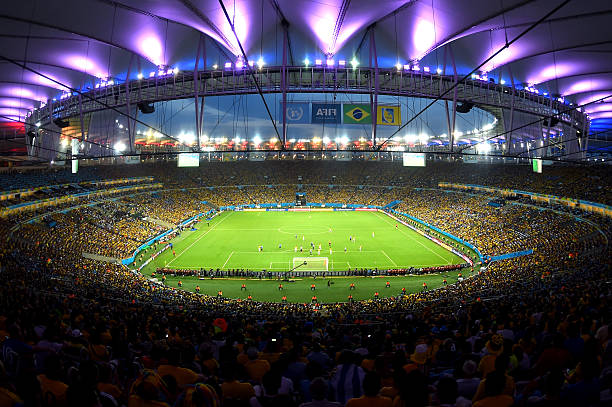
Brazil has 108 major stadiums with a capacity of at least 10,000, the highest number in South America by a considerable distance.
The Maracana in Rio de Janeiro holds 73,193 fans and is one of the most iconic venues in the history of the sport.
It once held over 200,000 fans for the 1950 World Cup Final, where Brazil’s defeat to Uruguay became known as the Maracanazo.
Brazil hosted the 2014 FIFA World Cup across 12 cities and 12 different stadiums, a project that required billions in investment and left a lasting legacy of world-class venues.
The Mane Garrincha in Brasilia (69,910), the Mineirao in Belo Horizonte (66,658), and the Morumbi in Sao Paulo (66,435) are among the most historic venues in South American football.
Brazil are the most successful nation in World Cup history with five titles, and according to FIFA, they remain one of the most decorated footballing nations on the planet.
You can also read about the countries with the most football clubs in the world.
1. China – 208 Stadiums
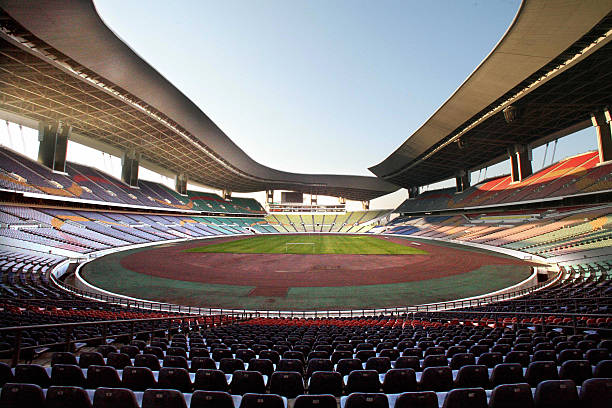
China has more major football stadiums than any other country in the world, with 208 venues holding at least 10,000 fans.
That figure dwarfs every other nation on this list and reflects the government’s massive long-term investment in football infrastructure.
The Guangdong Olympic Stadium in Guangzhou is the largest, holding 80,012 fans.
The Beijing National Stadium, known as the Bird’s Nest, holds 80,000 fans and hosted the football tournament at the 2008 Summer Olympics.
The Hangzhou Sports Park (80,000) was purpose-built for the 2022 Asian Games, one of many world-class venues built in recent years across dozens of Chinese cities.
What makes China’s count so extraordinary is the geographic spread, from Shanghai and Guangzhou to regional venues in cities like Wuhan, Chengdu, and Ordos.
According to BBC Sport, China’s football ambitions have been backed by unprecedented government investment at every level of the game.
China are one of the most ambitious footballing nations in Asia and you can read more about the top football clubs in China and the facts about football in China.
Which other country do you think deserves a mention for the quality or quantity of its football stadiums? Let us know in the comments!