
The 2026 FIFA World Cup has never been won by a genuine dark horse.
Uruguay in 1950 is probably the closest we have ever come, but even they had won the last World Cup they entered back in 1930.
Since then, West Germany in 1954, Argentina in 1978, and Italy in 2006 have been the most surprising winners based on pre-tournament odds, but none of them were what you would call a true shock.
So could 2026 finally be the World Cup where a dark horse emerges victorious?
Probably not, but it is a lot of fun to think about.
Following the expansion to 48 teams, exactly two-thirds of all teams at this World Cup will progress from the group stage to the knockout rounds.
That changes the dynamic entirely and makes the tournament more open than any edition we have seen before.
The pool of potential dark horses at the 2026 World Cup is bigger than ever, and this list cuts through the noise to give their names.
1. Colombia
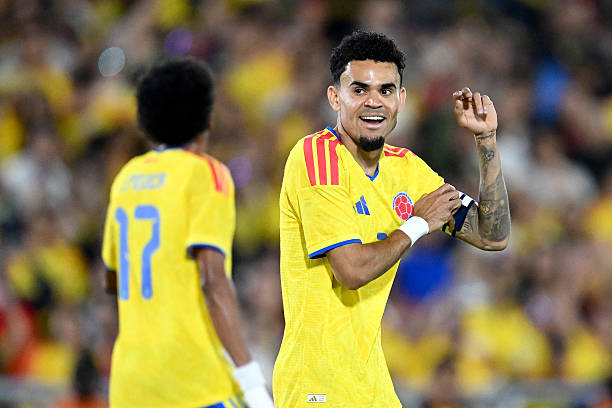
Colombia are one of the most talked-about outsiders heading into the 2026 World Cup, and with good reason.
The Coffee Growers reached the 2024 Copa América final, which was their best showing since winning the tournament on home soil in 2001.
At that tournament they topped a group containing Paraguay, Costa Rica, and Brazil while going unbeaten, thrashed Panama 5-0, beat Uruguay 1-0, and only lost 1-0 in extra time against the reigning world champions Argentina in the final.
Colombia had just as many chances as Argentina in that final, going toe-to-toe with the 2022 World Cup winners for over 120 minutes.
What makes Colombia so dangerous is the sheer variety of threat in their forward line, with Luis Díaz, James Rodríguez, Jhon Arias, and Jhon Córdoba all capable of winning a game on their own.
Crystal Palace’s Daniel Muñoz provides energy and creativity from right back, and the athleticism of Richard Ríos and Jefferson Lerma in central midfield gives them a real engine in the middle of the park.
Head coach Néstor Lorenzo has worked wonders since his appointment in 2022.
The biggest concerns are the occasional lapses in concentration from their centre-backs and a group that contains Portugal, Uzbekistan, and DR Congo, which is not easy.
Still, Colombia are expected to progress, and if James Rodríguez can roll back the years, anything feels possible.
2. Mexico
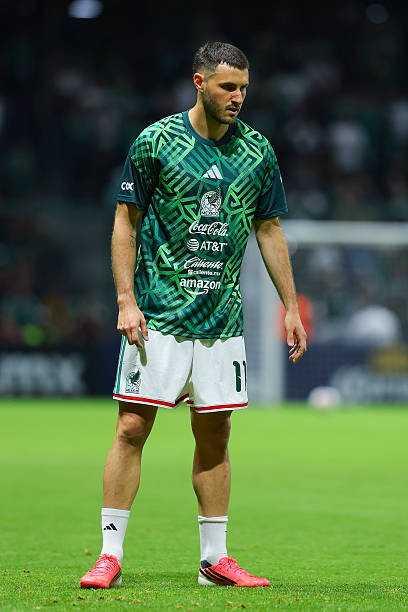
Mexico are arguably the darkest of all the dark horses on this list, which is surprising given that they are one of the three co-hosts.
The last two times Mexico hosted the World Cup on their own, in 1970 and 1986, they reached the quarter-finals, both of which remain their best-ever finishes at the tournament.
Since then, Mexico endured a run of seven consecutive round-of-16 exits before finally breaking that curse in Qatar, but only by getting knocked out in the group stage for the first time since 1978.
Since then, however, they have won back-to-back CONCACAF Gold Cups and arrive at this tournament with one of the most intriguing squads they have assembled in years.
Mexican football has a long history of underperforming given the nation’s size and passion, which is what makes 2026 feel so different.
They have Raúl Jiménez, one of the best strikers in North American World Cup history, Santiago Giménez at AC Milan, and most excitingly of all, 17-year-old Gilberto Mora, the youngest player at the entire tournament.
They play in a group without any major powerhouses, with their home crowd behind them for all three matches.
Under Javier Aguirre, they are a disciplined, hard-working, and dangerous counter-attacking side.
With 130 million passionate football fans behind them on home soil, do not write them off.
3. Norway
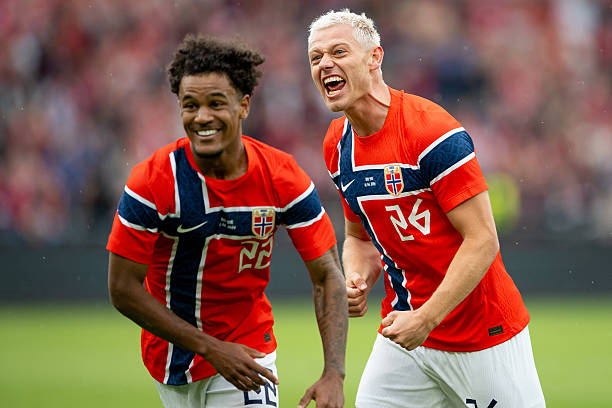
Norway are the single most popular dark horse shout at the 2026 World Cup, and while it is tempting to say that is 90% Erling Haaland, who is the best striker in the world, the reality is that this is a well-rounded and genuinely dangerous team.
Haaland has 55 international goals in 49 caps, which is a staggering rate for someone who plays for a national team of Norway’s size.
But this is not just a one-man team. They have Alexander Sørloth alongside him up front, Martin Ødegaard pulling strings in midfield, Antonio Nusa providing pace and width, and a back line of Kristoffer Ajer, Leo Østigård, and Julian Ryerson that is genuinely well-organised.
Norway qualified for this World Cup by winning eight of their eight qualifying games, scoring 37 goals and conceding just five.
The only thing working against them is a brutal group that contains France and Senegal.
However, who on earth is going to want to face Sørloth and Haaland, two players standing 6ft 5in tall who have scored 81 goals in 120 caps between them, in a knockout round match?
Nobody. That is who. Norway are less dark horse and more just an extremely solid football team, and they should be taken very seriously.
4. Japan
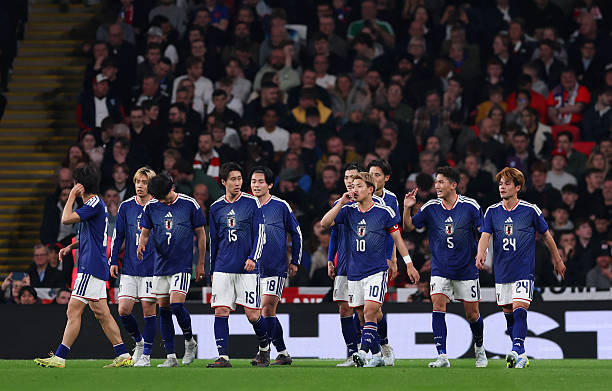
Japan are arguably the single strongest team at this tournament outside of the genuine elite, and the way they are discussed as outsiders continues to be one of the most underrated stories in world football.
This is a team that qualified ahead of Germany and Spain at the last World Cup.
They have beaten England, Scotland, Ghana, and Brazil over the last nine months heading into this tournament.
Head coach Hajime Moriyasu has turned Japan into a well-oiled machine that plays with the back three, where everyone knows their roles to perfection.
Takefusa Kubo is the nation’s biggest attacking superstar and one of the most technically gifted players at the tournament.
The thing that makes Japan so dangerous is that the whole is always far greater than the sum of its parts, and they are extraordinarily difficult to break down.
Asian football has produced some of the great tournament stories of recent World Cups, and Japan are primed to write the biggest one yet.
They have a very winnable group against the Netherlands, Sweden, and Tunisia, and if they top it, the knockout rounds are entirely within reach.
It would be a major upset if they did not reach the round of 16.
5. Ivory Coast
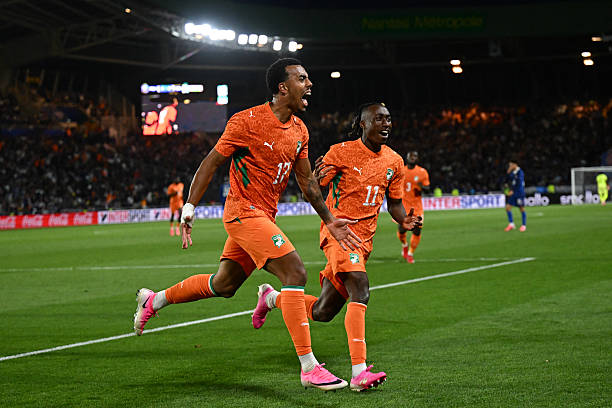
Ivory Coast should be an absolute blast to watch at the 2026 World Cup, and they are one of the most genuinely underrated sides at the entire tournament.
Coach Emerse Faé became the first locally appointed Ivorian manager to lead the Elephants through a successful World Cup qualification campaign, and his story is remarkable.
After a 4-0 group-stage humiliation at the 2023 AFCON led to the previous coach’s departure, Faé was elevated from assistant to head coach mid-tournament and orchestrated a stunning turnaround, eliminating defending champions Senegal, beating Mali with ten men, and defeating Nigeria in the final on home soil.
That is the kind of resilience and belief that travels to World Cups.
The attacking options available to Faé are genuinely frightening. Amad Diallo of Manchester United is the player everyone wants to see — electric, two-footed, and coming off his best club season.
Alongside him, RB Leipzig’s Yan Diomandé is one of Europe’s most coveted young forwards, with Premier League giants circling ahead of the summer transfer window.
Add Simon Adingra at Monaco, Ange-Yoan Bonny at Inter Milan, Evann Guessand at Crystal Palace, and Nicolas Pépé at Villarreal to the mix and this is one of the deepest attacking pools in the entire tournament.
In midfield, captain Franck Kessié provides the leadership and combative edge, Ibrahim Sangaré at Nottingham Forest is one of the most powerful central midfielders in the Premier League, and Seko Fofana brings craft and technique.
At the back, Ousmane Diomande at Sporting CP is one of the most highly rated young centre-backs in European football, and the experience of Evan Ndicka at Roma and Odilon Kossounou at Atalanta gives the defensive line real quality.
Ivory Coast topped their CAF qualifying group with 5 wins from 6 games, scoring 14 more goals than they conceded.
The challenge is their group. They face Ecuador, Germany, and Curaçao in Group E, which means their first two games are genuine tests against quality opposition where they will need to take points.
Ivory Coast are looking to get past the group stage for the first time at a World Cup, which is a remarkable stat for a nation of their talent and size.
If Amad Diallo hits top form and the attacking line fires together, the Elephants are capable of causing problems for any team in this tournament. They are one of Africa’s most powerful football nations and this could finally be the World Cup where they show it on the global stage.
6. Senegal
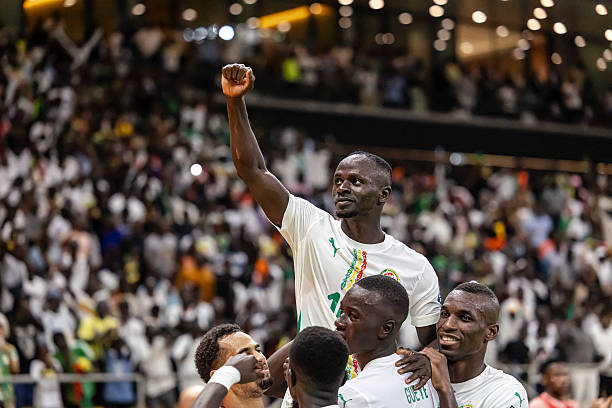
Senegal were discussed as a genuine dark horse heading into the 2022 World Cup before being dispatched by England in the round of 16.
But a lot has changed since then. They have beaten England 3-1, becoming the first African team ever to defeat the Three Lions.
They beat Brazil 4-2. They won the Africa Cup of Nations before a controversial DRC walkover stripped them of the title.
The point is clear: Senegal are a formidable team when they are on the pitch and performing. Their squad is genuinely loaded.
Édouard Mendy in goal, Kalidou Koulibaly and Krepin Diatta in defence, Idrissa Gueye and Pape Matar Sarr in central midfield, and a forward line containing Sadio Mané, Nicolas Jackson, Iliman Ndiaye, and 18-year-old PSG wonderkid Ibrahim Mbaye is as dangerous as anything outside of the top five favourites.
Senegal are one of Africa’s most powerful football nations and they are drawn in a group against France, Norway, and Iraq that, while difficult, is entirely winnable if they hit their best level from the opening whistle.
Their second group game against Norway is arguably the most exciting match of the entire group stage.
7. Turkey
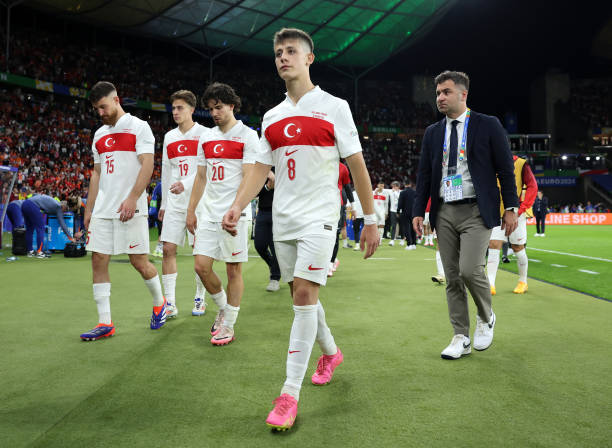
Turkey are the dark horse shout that simply will not go away, and there are genuine reasons to take them seriously.
They reached the quarter-finals of Euro 2024, where they were only narrowly beaten by the Netherlands.
Their World Cup record is bizarre in the best possible way — they have only been to one World Cup in the last 70 years, and yet they reached the semi-finals and finished third at the 2002 tournament.
Captain Hakan Çalhanoğlu is one of the best defensive midfielders in Europe at Inter Milan, and Arda Güler at Real Madrid and Kenan Yıldız at Juventus are two of the most exciting young attacking players at the entire tournament.
Vincenzo Montella deserves enormous credit for the spirit and togetherness he has built within this squad since his appointment in 2023.
Turkey beat Romania and Kosovo in the playoffs to qualify for this World Cup, which showed exactly what this team is capable of against quality opposition under pressure.
Their defensive weaknesses are real and worth noting, but in a group that does not have a clear powerhouse, Turkey are capable of topping it and making a real noise in the knockout rounds.
8. Ecuador
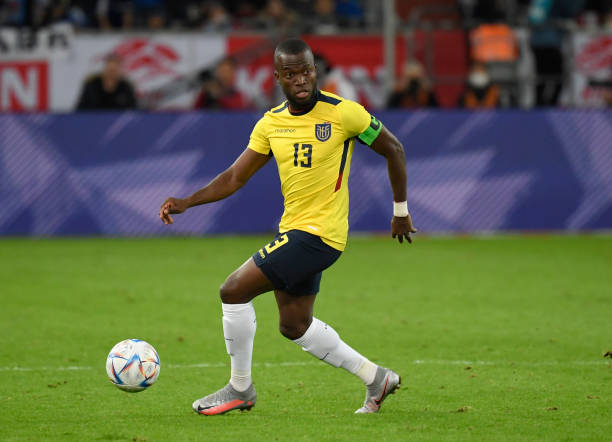
Ecuador are the hipster’s dark horse choice at the 2026 World Cup, and there are very sound footballing reasons to back them up.
Only Argentina won more points than Ecuador in CONMEBOL qualifying, and no team in the entire 18-game process conceded fewer than Ecuador’s five goals.
The next tightest defences, Paraguay and Argentina, conceded twice as many goals.
That is an extraordinary defensive record for a team that nobody outside of South America is talking about.
Under coach Sebastián Beccacece, Ecuador are extremely well-drilled positionally and play with speed, intensity, and collective intelligence that makes them deeply unpleasant to face.
They have Chelsea’s Moisés Caicedo as the engine of their midfield, Arsenal’s Kendry Páez as one of the most exciting teenagers in the tournament, and William Pacho at PSG as one of the best young centre-backs at the World Cup.
They are drawn in a group with Germany, Ivory Coast, and Curaçao, which is challenging, but their defensive organisation and counter-attacking threat could cause real problems for either of the top two seeds.
9. Sweden
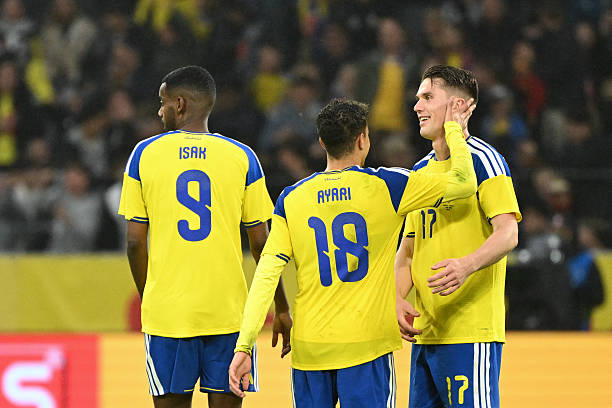
Sweden are no strangers to making a splash at a World Cup in North America, having finished third at the 1994 tournament in the United States.
This squad is not as strong as some of the great Sweden sides of the past, but they have two genuinely world-class forwards at the top who can win a match on their own.
Alexander Isak at Liverpool is one of the best strikers in world football right now, and Viktor Gyökeres at Arsenal arrives at the tournament in the form of his career after a staggering season in the Premier League.
Between them, they represent close to 200 million pounds worth of attacking talent in the same front two.
Graham Potter, for all of the criticism he received during his club career, is close to the perfect international manager for tournament football, building a calm, cohesive camp where players feel trusted and free to express themselves.
Sweden are in a competitive group with the Netherlands, Japan, and Tunisia, but if Isak and Gyökeres both hit form, they are dangerous enough to cause real problems for any defence at this tournament.
They should not be dismissed.
10. Austria
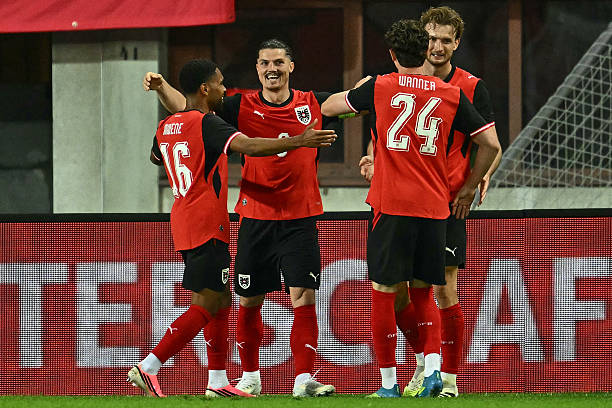
Austria were a lot of people’s dark horse at Euro 2024 and Ralf Rangnick’s side looked genuinely impressive throughout the qualifying campaign, topping their group and losing just one game.
Rangnick has been one of the most influential coaches in European football over the last two decades, and his ability to build well-organised, high-intensity, pressing-based teams is well established.
Austria have captain David Alaba as their most decorated ever player, Marcel Sabitzer as one of the most experienced midfielders in the squad, and a group of talented young players coming through who have been developed under Rangnick’s system over several years.
Their first two group games come in the extreme heat of Texas and California against Jordan and Argentina, which is a brutal opening, but the third game against a fellow European side gives them a real chance to qualify.
Nobody outside of the tournament’s favourites goes into a World Cup with a more carefully prepared tactical blueprint than Austria under Rangnick.
Underestimate them at your peril.
Why the 2026 World Cup Format Favors Dark Horses
The expansion to 48 teams means:
- 12 groups of 4 teams, with the top two and the eight best third-placed teams advancing.
- A new Round of 32, giving underdogs more chances to spring upsets.
- More rest days in the group stage, helping smaller nations recover better.
- Three host countries spread across multiple climates, neutralizing some advantages traditionally enjoyed by European teams.
This is the most dark-horse-friendly World Cup format ever created.
For more World Cup content, check out our breakdown of the countries that have won the World Cup, our guide on the best national soccer teams in the world, the youngest players at the 2026 World Cup, and our list of the longest unbeaten runs in international football.
Who is your pick as the biggest dark horse at the 2026 World Cup? Let us know in the comments below!