

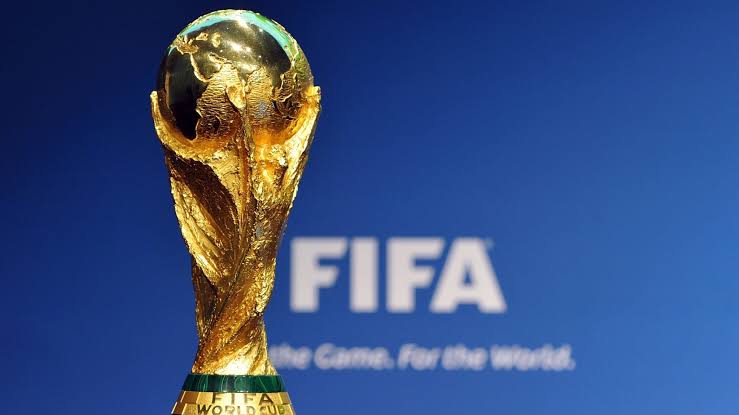
Hosting the FIFA World Cup can be a prestigious feat for any country (or countries).
That is why so many countries have regularly competed in a bid to host the World Cup.
The FIFA World Cup hosting is usually rotated between continents.
This way, the host country is now chosen in a vote by FIFA’s Council (formerly Executive Committee).
The voting process is through an exhaustive ballot system, and the decision is currently made some years in advance of the tournament.
We already know who will be hosting the next three editions of the World Cup. The 2026 FIFA World Cup will be jointly hosted by the United States, Canada, and Mexico, marking the first time the tournament will feature 48 teams.
The 2030 FIFA World Cup, which will mark the 100th anniversary of the competition, will be hosted across three continents by Spain, Portugal, and Morocco, with centenary celebration matches taking place in Uruguay, Argentina, and Paraguay — where the very first World Cup was held in 1930.
Then, the 2034 FIFA World Cup is set to be hosted by Saudi Arabia, taking the tournament back to the Middle East just 12 years after Qatar 2022.
But we do not yet know which countries will host the World Cup after 2034.
Today, we look at 10 countries that are likely to host the World Cup from 2038 to 2050.
Possible FIFA World Cup Hosts in 2038
Here are the potential future World Cup bids or host in 2038:
1. Australia and New Zealand

Australia and New Zealand have shown strong interest in bidding for the World Cup and bringing the men’s tournament to Oceania for the first time ever.
Both countries successfully co-hosted the 2023 FIFA Women’s World Cup, proving they can manage logistics, travel, security, and the fan experience across multiple cities.
Australia provides most of the large stadiums, with venues in Sydney, Melbourne, Brisbane, Perth, and Adelaide meeting FIFA’s capacity requirements. New Zealand contributes solid supporting infrastructure and additional host cities.
The main limitation is geography. Long travel distances, particularly between the two countries, would need careful scheduling. However, this challenge is balanced by proven operational competence and political stability.
Since FIFA’s continental rotation policy effectively rules out Asia (after Saudi Arabia 2034) and the Americas (after the 2026 and 2030 tournaments), Australia and New Zealand could be strong frontrunners for 2038.
2. Ghana, Benin, Togo, and Nigeria
Only one African country has succeeded in hosting the World Cup — South Africa, and Morocco will host some in 2030.
Ghana have shown an interest in hosting the World Cup in 2038.
Director-General of the National Development Planning Commission (NDPC), Dr. Nii Moi Thompson, reported that plans were underway to improve sports in Ghana and bid to host the World Cup in 2038.
Ghana would not host the tournament alone, so it’s possible that they would submit a joint bid with West African neighbors, Togo and Nigeria.
Cameroon, who are hosts of the 2022 African Cup of Nations, could decide to join as co-hosts.
The three West African nations have a strong of hosting the World Cup in 2038.
Nonetheless, that can only be possible if another African country fails to host the World Cup before 2038.
3. Greece and Turkey
A joint bid between Greece and Turkey would be politically and culturally significant.
Together, they could comfortably meet FIFA’s stadium requirements. Greece brings venues like the Athens Olympic Stadium, while Turkey adds depth with large stadiums in Istanbul, Ankara, and Bursa, many already exceeding 40,000 capacity.
Both countries have solid tourism infrastructure, major international airports, and passionate football cultures.
Travel distances are manageable, and Istanbul offers a ready-made hub for tournament operations.
Using sport to bring together two nations with a long history of political tension would send a powerful message — much like Japan and South Korea did in 2002. However, sustained political coordination and security alignment would be essential for this bid to succeed.
Possible FIFA World Cup hosts in 2042
Here are the potential future World Cup bids or host in 2042:
4. Germany
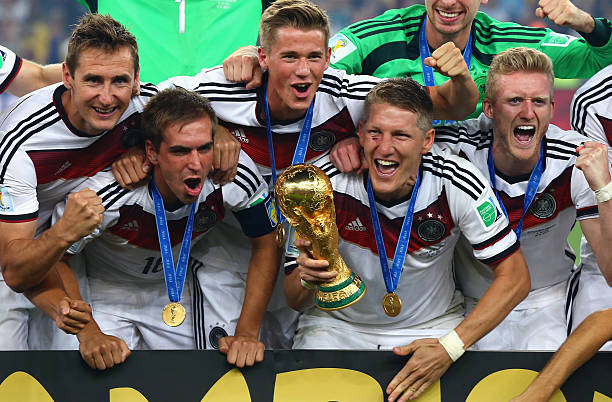
The German Football Association (DFB) has publicly confirmed that it is actively examining the feasibility of bidding to host the 2042 tournament.
Germany already hosted the World Cup in 2006, which was widely regarded as one of the best-organised tournaments in modern history.
After the success of UEFA Euro 2024, Germany has shown that it can still deliver world-class football events with minimal infrastructure issues.
With existing modern stadiums in Berlin, Munich, Dortmund, Hamburg, and Frankfurt, Germany could easily handle the demands of a 48-team tournament.
5. China
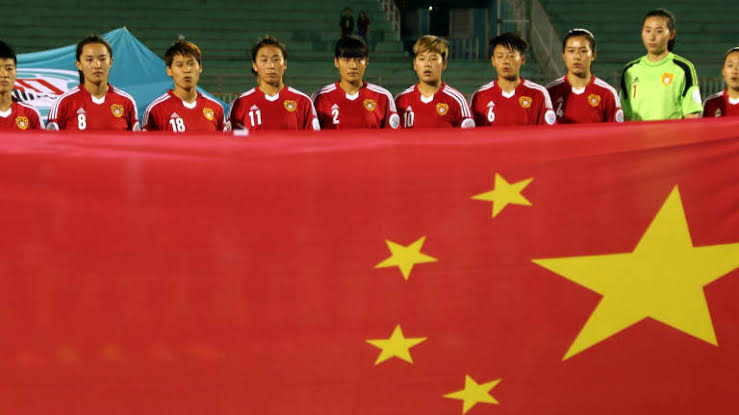
Isn’t it strange that the most populous country in the world are yet to host the biggest footballing tournament in the world?
China has always shown a strong desire to host the World Cup.
China’s President Xi Jinping met FIFA President Gianni Infantino in Beijing on June 14 and expressed his strong hope that China would host a World Cup in the future.
Who knows? 2042 could be the year China gets that opportunity.
The 2002 and 2022 World Cup were hosted by Asian countries, so 2042 might not be different.
6. The United Kingdom and the Republic of Ireland
England have always wanted to host the FIFA World Cup again, considering that they last hosted (and won) it in 1966.
Following the United Kingdom’s hosting of the 2035 Women’s World Cup, FIFA officials have encouraged an England-led or pan-British Isles bid for a men’s tournament in the 2040s.
The English FA has been considering a joint bid with Scotland, Wales, Northern Ireland, and the Republic of Ireland.
That would mean that the United Kingdom and the Republic of Ireland could all submit a joint bid for the 2042 World Cup, returning the tournament to the home of football for the first time in over 75 years.
7. Switzerland and Austria
Austria and Switzerland have modern stadiums and a strong history of co-hosting events like UEFA Euro 2008.
However, capacity is their main challenge. Currently, only one stadium across both countries exceeds 40,000 spectators, so a World Cup bid would require major expansions and new builds.
Venues in Vienna, Basel, Zurich, Bern, Geneva, Salzburg, and Graz would form the core, supported by excellent rail links and compact geography.
The limitations are cost and planning complexity, as upgrading multiple stadiums requires significant investment. But if both countries are willing to commit, this could be a beautifully organised Alpine World Cup.
8. Colombia, Panama, and Costa Rica
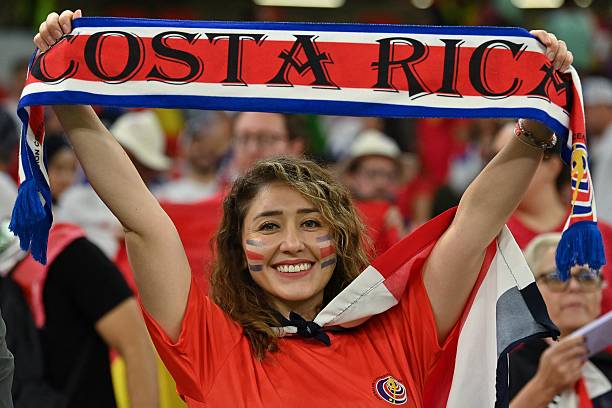
A Central and South American joint bid involving Colombia, Panama, and Costa Rica could be a fascinating proposition for 2042.
Colombia has solid football infrastructure with stadiums in Bogotá, Medellín, Cali, and Barranquilla, while Panama and Costa Rica would benefit from significant infrastructural investment to bring them up to FIFA standards.
The three countries are geographically close, making travel feasible for fans and teams alike.
The biggest hurdles would be Colombia’s past hosting issues (it pulled out of hosting the 1986 World Cup) and the smaller capacities of stadiums in Panama and Costa Rica.
However, with FIFA’s growing willingness to expand co-hosting arrangements, this bid could pull off a surprise.
Possible FIFA World Cup hosts in 2046
Here are the potential future World Cup bids or host in 2046:
9. Japan-led East Asian and ASEAN Coalition
Japan is leading talks for an unprecedented, massive joint bid with up to six other nations across the East Asian Football Federation (EAFF) and ASEAN Football Federation.
The Japan Football Association (JFA) and its president, Tsuneyasu Miyamoto, have held high-level regional meetings with Asian football federations to build this coalition.
Preliminary discussions outline a multi-nation proposal involving Japan, South Korea, China, Thailand, Indonesia, Malaysia, and Singapore.
Like the 2026 and 2030 World Cups, the 2046 tournament will utilise the expanded 48-team format spanning multiple countries. However, not all participating nations will host matches; the plan centres on matching stadiums and infrastructure requirements across the region.
Vietnam was initially linked to early discussions but is reportedly not part of the current coalition framework.
The bid would showcase Asia’s economic and footballing growth, leveraging world-class infrastructure in Tokyo, Seoul, Shanghai, and Singapore, alongside emerging hubs in Bangkok, Jakarta, and Kuala Lumpur.
However, the logistical complexity of coordinating seven nations, managing time zones, visa policies, and travel distances would be enormous. Political tensions between some of the involved countries could also pose challenges.
If executed properly, this could become the largest and most ambitious World Cup in history.
Possible FIFA World Cup hosts in 2050
Here are the potential future World Cup bids or host in 2050:
10. A Pan-African Multi-Nation Bid
By 2050, FIFA’s continental rotation policy will likely return the World Cup to Africa, and a bold, multi-nation African bid could be the perfect way to mark the occasion.
Potential candidates include Morocco, Nigeria, South Africa, Egypt, Senegal, and Ivory Coast, although Morocco’s involvement in the 2030 tournament may exclude it from this particular bid.
Nigeria, Africa’s most populous nation, has long expressed interest in hosting the tournament and boasts a passionate football culture, while South Africa has previous experience as the first African nation to host the World Cup in 2010.
Egypt brings strong infrastructure in Cairo and Alexandria, while Senegal and Ivory Coast have recently invested heavily in stadium development following their hosting of the Africa Cup of Nations.
A pan-African bid would symbolise unity across the continent and showcase Africa’s growing footballing identity on the world stage.
The challenges, however, would be significant. Coordinating infrastructure, transport, security, and governance across multiple African nations would require unprecedented cooperation and investment.
Still, with FIFA increasingly open to multi-nation tournaments, a pan-African World Cup in 2050 could be a historic and unifying moment for the continent and global football alike.
This article was originally written by Nwokolo Collins.






You forgot to mention that 2026 FIFA World Cup in this article since it will be played in Canada, Mexico and United States.