

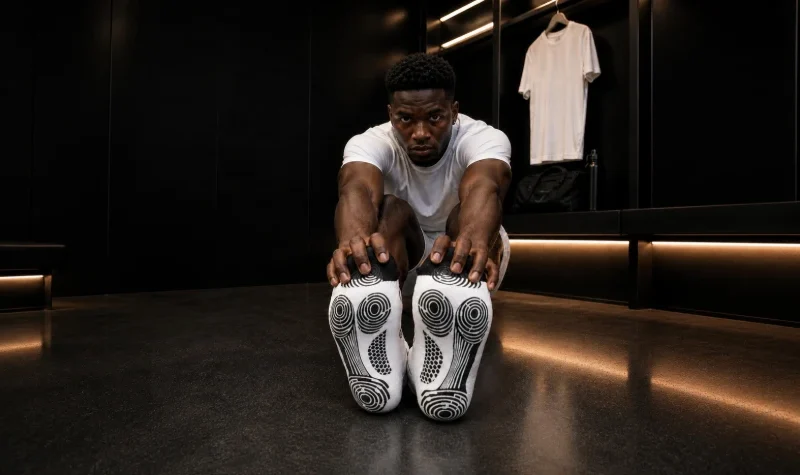
For decades, soccer players treated socks as one of the simplest parts of their kit. Boots received the technology, shin guards provided the protection, and socks mostly completed the uniform.
That is beginning to change.
Modern players wear boots designed with lightweight synthetic uppers, carefully arranged stud patterns, and specialized soleplates. Yet even the most advanced boot still depends on a less visible layer: the sock connecting the foot to the inside of the shoe.
If that sock becomes wet, twists around the foot, adds too much bulk, or slides across the insole, an expensive boot can feel far less precise. This has turned the soccer sock from a basic garment into a genuine piece of performance equipment.
Here are seven reasons modern soccer socks are becoming nearly as engineered as the soccer cleats worn over them.
7 Reasons Modern Soccer Grip Socks Are Changing the Game
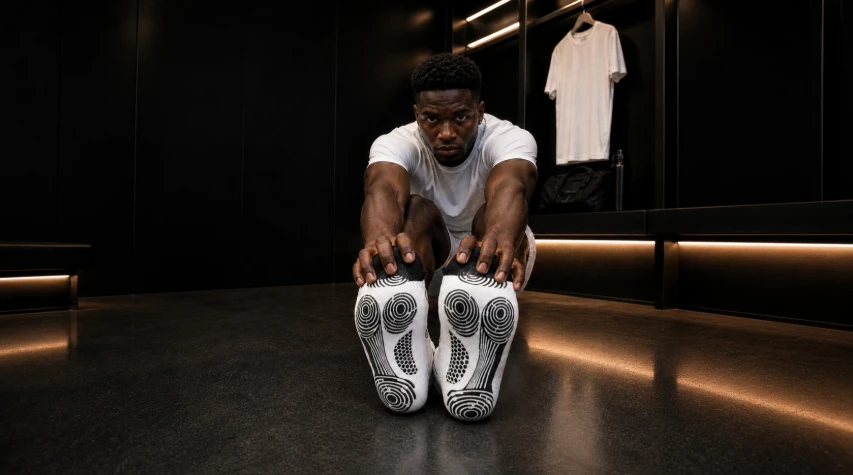
1. Players Now Understand the Foot-to-Cleat Connection
Soccer traction is usually discussed in terms of where the studs meet the grass. That is only one part of the system.
Inside the boot, the foot interacts with the sock while the sock interacts with the insole. The studs may remain planted while the foot still moves slightly inside the shoe. Players often notice this as heel lift, forefoot sliding, or the need to curl their toes during a hard stop.
A performance sock cannot correct a boot that is the wrong size or shape. However, when the cleat already fits correctly, the sock can influence how consistently the three layers (foot, sock, and shoe) work together.
This is the basic idea behind the growing grip-sock category. The objective is not to create magical speed. It is to reduce avoidable movement and help the player maintain a secure, repeatable connection inside the boot.
2. Grip Patterns Are Becoming More Strategic
The earliest grip socks often followed a simple formula: take an ordinary athletic sock and add silicone shapes to the bottom.
Modern designs are more deliberate. Grip elements can vary in size, direction, and position depending on where the foot loads the insole during acceleration, deceleration, and changes of direction.
More silicone does not automatically mean better performance. An extremely thick pattern may change how a close-fitting boot feels. Large grip elements can appear impressive in photographs while adding material beneath the foot that a player may not want.
The better question is whether the traction works as part of the whole sock. External grip is useful only when the fabric itself remains secure around the foot.
3. Right-and-Left Construction Is Replacing the Universal Tube
The right and left feet are mirror images, but many soccer socks can be worn interchangeably on either side. That makes manufacturing simple, although it limits how precisely grip and support zones can follow the foot.
Genuinely anatomical socks use different shapes for the right and left sides. This allows traction, stretch, and compression zones to be positioned according to the geometry of each foot.
Players should look beyond printed R and L markings. A truly anatomical pair should show differences in its panel construction, shape, or grip placement. Otherwise, the labeling may be more decorative than functional.
One example is ZERO GIVE’s anatomical soccer grip socks, which use dedicated right-and-left construction alongside five performance zones and structured support through the foot and ankle.
4. Sock Thickness Is Now Part of Boot Fitting
A sock changes the amount of usable space inside a soccer boot. That makes thickness an important and surprisingly overlooked equipment variable.
A thick sock can help fill a slightly roomy boot, but it may compress the toes or forefoot inside a correctly fitted speed cleat. A thin sock preserves more internal volume and may create a closer feel, although players still need enough structure to prevent bunching and twisting.
This is why fitting boots in thin store socks can be misleading. Players should try footwear with the same sock and insole combination they intend to use in training and matches.
Brands frequently describe products as thin, ultralight, or cushioned without providing measurements. A published soccer grip sock weight and thickness study demonstrates a more useful approach by reporting sample weight plus measured toe and cuff thickness across multiple products.
There is no single perfect number for every foot. The value of measurement is that it allows players to compare products using something more objective than advertising language.
Just as the best defenders in the world obsess over every detail of their physical preparation, serious players at every level are beginning to pay the same attention to the equipment beneath their boots.
5. Technical Fibres Are Replacing Everyday Cotton
Sweat changes how a sock behaves during a match. As fabric becomes saturated, it can feel heavier, stretch differently, and lose some of the close fit it had during warm-up.
Cotton is comfortable for daily wear, but it absorbs moisture readily and can remain wet. Soccer performance socks increasingly use technical fibres such as nylon, polyester, elastane, and branded moisture-management materials.
These fibres are selected for specific jobs:
- Nylon or polyester can provide durability and structure.
- Elastane or LYCRA provides stretch and recovery.
- Moisture-management fibres help move sweat away from the skin.
No sock eliminates sweat, and moisture-wicking should not be confused with waterproofing. The goal is to manage moisture while maintaining the sock’s shape and fit through a demanding session.
6. Compression Is Becoming Measurable
“Compression fit” appears on many sports products, but the phrase can mean almost anything. Sometimes the garment applies an engineered pressure profile. Sometimes it simply means the fabric feels tight.
Modern performance socks are beginning to disclose pressure ranges rather than relying on the adjective alone. In soccer, compression can contribute to a secure feel and help the sock remain positioned around the foot and lower leg.
It is important to keep those claims realistic. A compression sock should not be presented as a guaranteed way to run faster, prevent injury, or treat a medical problem. It is one design component within a larger performance system.
The sock should feel snug without creating pain, numbness, unusual colour changes, or excessive restriction. Players with known circulation problems should seek appropriate medical advice before choosing compression apparel.
Physical conditioning matters at every level of football, whether you are looking at soccer players who run the most at the elite level or amateur players trying to maintain peak performance across a full match.
7. Players Are Demanding Evidence Instead of Adjectives
Soccer marketing is filled with impressive words: elite, explosive, responsive, ultrathin, and game-changing. These descriptions are easy to print and difficult to verify.
A more informed buyer can ask for specific information:
- What is the complete fibre composition?
- Is the pair genuinely shaped for the right and left feet?
- What pressure range does the compression apply?
- How much does the sock weigh?
- How thick is it at the toe and cuff?
- Where is the grip placed, and why?
These questions do not guarantee that one product will suit every player. They do make it easier to distinguish engineering from decoration.
How a Lower-Extremity Physician Approaches Soccer Sock Design
Dr. Ralph Carullo brings an unusual background to this category. He is a physician, a Diplomate of the American Board of Venous and Lymphatic Medicine, a competitive youth soccer coach, and the founder of ZERO GIVE.
His professional work focuses on the lower extremities, while his soccer experience has exposed him to the practical problems players face during long training sessions and matches.
Carullo’s design philosophy is that grip should not be treated separately from anatomy, pressure, moisture, and fit. The sock must stay connected to the foot while also interacting effectively with the insole.
That does not make a soccer sock a medical device, nor does it justify exaggerated health claims. The value of the medical perspective is in asking more precise questions about how materials and pressure interact with the lower extremity.
How Players Should Test a Performance Soccer Sock
A sock that feels tacky in the hand may perform differently inside a boot. The only meaningful test uses the player’s actual equipment and soccer movements.
Wear the same boots and insoles, then complete a session containing:
- Short accelerations
- Hard stops
- Cuts in both directions
- Repeated striking and planting
- Enough continuous activity for sweat to build
Pay attention to heel lift, forefoot movement, bunching, toe pressure, and whether the sock rotates around the foot.
Test one variable at a time. Changing the boots, insoles, and socks together makes it impossible to know which adjustment affected the result.
It is also worth repeating the test after several wash cycles. Stretch, texture, and fit may change as a sock is used.
The same attention to detail that elite players like the best wingers in the world apply to their playing style should be applied to every piece of equipment they wear.
The Smallest Item May Be the Next Important Upgrade
Soccer will always be a relatively simple game. A player needs a ball, a pitch, and the ability to make decisions under pressure. No piece of equipment replaces skill or hard work.
But at competitive levels, players want every part of their setup to perform a clear job. Boots have evolved from simple leather footwear into specialized equipment. Socks are now following the same path.
The next time players compare stud patterns and boot uppers, they may want to look one layer deeper. The sock inside the soccer cleat is no longer just a finishing touch to the uniform. It is becoming part of the technology.