

The answer lies in a complex mix of genetics, environment, coaching, and psychology.
In this article, we’ll unpack these factors in detail, using real‑world examples to show why greatness in soccer is never the result of one factor alone.
1. Genetics and Natural Ability

It’s impossible to ignore the role of biology. Some players are simply born with physical attributes that give them an advantage. These include:
- Speed and acceleration – the ability to leave defenders behind.
- Agility and coordination – crucial for dribbling and quick changes of direction.
- Stamina and endurance – sustaining high performance for 90 minutes.
- Body type and muscle composition – fast‑twitch vs. slow‑twitch fibers.
Take Kylian Mbappé. His explosive pace is something defenders dread. You can train to get faster, but there’s a genetic ceiling. Mbappé’s natural sprinting ability, combined with his soccer training, makes him nearly unstoppable in open space.
His brother, Ethan Mbappé, although they share the same blood, may not possess the same natural ability.
In contrast, a player with less natural pace, no matter how disciplined, may never reach that level of threat. Genetics don’t guarantee greatness, but they set the boundaries of what’s physically possible.
See more about the fastest footballers in history.
2. Early Exposure and Environment

Talent doesn’t grow in a vacuum. The environment where a player develops shapes their style, creativity, and confidence.
Street Football and Informal Play
Many of the game’s most gifted players honed their skills not in academies, but in street soccer. These unstructured environments encourage creativity, improvisation, and flair.
- Lamine Yamal, Barcelona’s teenage sensation, is a perfect example. Stories of him dribbling around dogs in his neighborhood capture how informal play sharpened his instincts and close control.
- Pelé and Ronaldinho grew up playing in the streets of Brazil, where tight spaces and improvisation bred artistry.
Cultural Influence
Countries with deep footballing cultures — Brazil, Argentina, Spain, Portugal — naturally produce more technically gifted players. Kids grow up with a ball at their feet, absorbing the game almost subconsciously.
Contrast this with nations where football isn’t the dominant sport. Even with professional academies, the cultural immersion is missing, and fewer players reach the same creative heights.
3. Coaching and Development Pathways
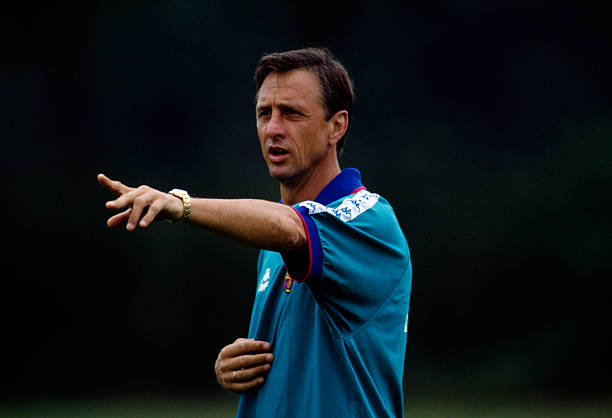
The quality of coaching and development systems can make or break a career.
Elite Academies
World‑class academies like La Masia (Barcelona), Ajax, Stade Rennais, and Sporting CP are football factories. They don’t just teach skills; they instill philosophies, tactical awareness, and professionalism.
- Andrés Iniesta became a midfield genius thanks to La Masia’s emphasis on ball control and positional play.
- Cristiano Ronaldo was polished at Sporting CP, where coaches recognized his potential and pushed him relentlessly.
Missed Opportunities
On the flip side, many talented youngsters never reach their potential because they lack access to quality coaching. A brilliant street footballer may fade away without the tactical and physical development that academies provide.
4. Game Intelligence (Football IQ)
Soccer is not only physical; it’s deeply cognitive. The best players see the game differently:
- Pattern Recognition – spotting repeating situations and knowing how to exploit them.
- Anticipation – predicting where the ball will go before it happens.
- Decision‑Making – choosing the right option under pressure.
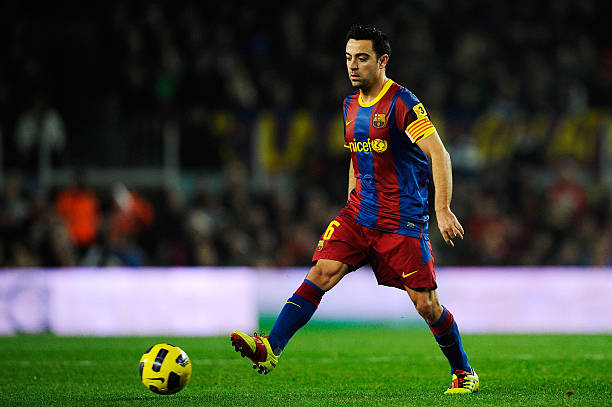
Xavi Hernández is a textbook case. He wasn’t the fastest or strongest, but his ability to read the game made him one of the greatest midfielders ever. Coaches often said he “saw the game two steps ahead.”
Similarly, Lionel Messi’s dribbling isn’t just about close control; it’s about knowing exactly when to accelerate, when to cut inside, and when to release the ball. That’s soccer or football IQ at its highest.
5. Psychological Factors

The mind is as important as the body. Two players with equal talent can have very different careers depending on their psychological makeup.
Confidence and Resilience
- Marcus Rashford showed resilience after missing a crucial penalty at Euro 2020. Instead of collapsing, he bounced back to lead Manchester United in goals the following season.
- In contrast, some players never recover from high‑profile mistakes, their confidence permanently shaken.
Mental Toughness
Elite players thrive under pressure. Champions League finals, World Cup knockouts — these moments demand nerves of steel. Cristiano Ronaldo and Sergio Ramos often seem to grow stronger in high‑stakes situations.
Discipline
Off‑field habits matter too. Players who avoid distractions, maintain focus, and live professionally often outlast equally talented peers who lack discipline.
6. Motivation and Work Ethic

Training sessions may look the same on paper, but the intensity and focus with which players approach them vary enormously.
- Cristiano Ronaldo is legendary for his work ethic. Teammates often recall him staying behind after training to perfect free kicks or sprints. His career longevity is a testament to his dedication.
- Zlatan Ibrahimović, too, pushed himself relentlessly, maintaining peak performance into his late 30s.
Contrast this with naturally gifted players like Adriano or Mario Balotelli, who struggled with consistency and discipline. Talent opened the door, but without work ethic, it wasn’t enough to sustain greatness.
7. Family and Social Influence

Family background can provide both genetic and social advantages.
Sons of Soccer Players
- Erling Haaland, son of former professional Alf‑Inge Haaland, inherited both physical traits and insider knowledge of the game.
- Marcus and Khephren Thuram, sons of World Cup winner Lilian Thuram, benefitted from growing up in a soccer‑focused environment.
Support Systems
Supportive families play a huge role in sustaining young players through difficult times. Many promising careers have been derailed by lack of emotional or financial support.
8. Luck, Timing, and Circumstance
Finally, soccer careers are shaped by factors outside a player’s control.
Injuries
Many careers have been cut short by injuries. Jack Wilshere was once hailed as England’s next midfield maestro, but repeated injuries robbed him of his prime years.
Right Place, Right Time
- Jamie Vardy’s rise is a fairytale. Playing non‑league soccer in his 20s, he got his break at Leicester City — and ended up winning the Premier League and playing for England.
- Countless equally talented players never got scouted or were overlooked because they played in the wrong system.
Coaching Decisions
Sometimes, a coach’s trust transforms a career. Pep Guardiola’s faith in young Sergio Busquets turned him into a Barcelona legend. Without that opportunity, Busquets might have remained a decent but unremarkable midfielder.
Conclusion
So, why are some soccer players better than others, even when they train the same and live the same way?
Because soccer greatness is never about one thing. It’s a cocktail of:
- Nature (genetics, natural ability)
- Nurture (environment, coaching, family influence)
- Mindset (psychology, motivation, discipline)
- Circumstance (luck, timing, opportunity)
The best players — Messi, Ronaldo, Iniesta, Lamine Yamal, Mbappé, Haaland — combine all of these elements. They have the natural gifts, the right environments, the mental strength, and the relentless drive.
For every superstar, there are hundreds of equally hardworking players who never reach those heights. That’s the beauty and the cruelty of football: it’s not just about how hard you train, but about how all these factors align.
And that is why, despite similar habits and training routines, some footballers shine ten times brighter than others.